
 Everybody likes a magic pill or, in the case perhaps of GLP-1 inhibitors, and I won’t use any trade names, a magic injection.
They have their role. Let’s be very, very upfront. They do have their uses. But, like all medications, there are also potential downsides. As with all medications, if we become fully reliant upon them, especially in terms of managing weight, it is unlikely that, in the long term, things are going to go that well.
There is an issue with children being overweight, not just in the United States. However, the data from the United States is probably higher and shows higher percentages than in other countries. For whatever reason, it is sometimes easier to get hold of that data.
There is a piece on MedPage Today, and, as always, we’ll put the link in the description: “Off-Label GLP-1 Use Skyrockets in Young Children.”
Weight-loss formulations are only approved for children 12 years and older. This article says there has been a 310-fold increase in prescriptions for children between eight and 11, despite a lack of FDA approval for this age group.
Now, immediately, a 310-fold increase sounds huge. It is coming off a very, very low base. The actual numbers say that, in total, this was still about 20,000-odd prescriptions. Let me just find the exact number. Here we go: 20,282 children with obesity received a GLP-1 prescription across the study period. That study did run for a period of time, although it does not actually state the exact period.
Now, it is sometimes fair to extrapolate. The fact that a medication has not been tested in a particular demographic does not mean that it won’t work.
The more important question is whether it may cause adverse effects in a group in which it has not been tested. Some people say children are small adults. No, they are still developing, and their bodies are changing and growing. We don’t necessarily know what impact any of these medications may have on this age group.
Now, it might be fine. I’m not saying that it isn’t, but we don’t know.
What we do know from previous experience is that some of the SSRI medications used to treat depression were tested in adults. It was found that, when they were used in teenagers, there was an increased risk of suicidality. In fact, one of the pharmaceutical companies was fined, I think, about $3 billion some years ago for promoting the off-label use of a particular SSRI medication in that age group.
Clearly, there were problems with it. That doesn’t mean that a medication cannot be used if there are potential side effects, but one really does need to tread more carefully. People taking it need to be very aware of the risks. When we don’t know what the risks are, you can’t really make anybody aware of them.
With children, the question does arise. Obesity is an issue among children, not just in America but across large parts of the Western world, and not even just the Western world anymore.
Why are children getting so overweight? Who is in charge of providing food for these children? It is the parents or guardians. It is not about blame or pointing fingers, but it is about identifying who is responsible.
At the moment, we have this view in society, and I think Thomas Sowell has a quote along these lines. I haven’t got it exactly, but it is something along the lines of: We’ve reached a stage where nobody is responsible for their own actions, but somehow everybody is responsible for what happens to other people. It is completely inverted.
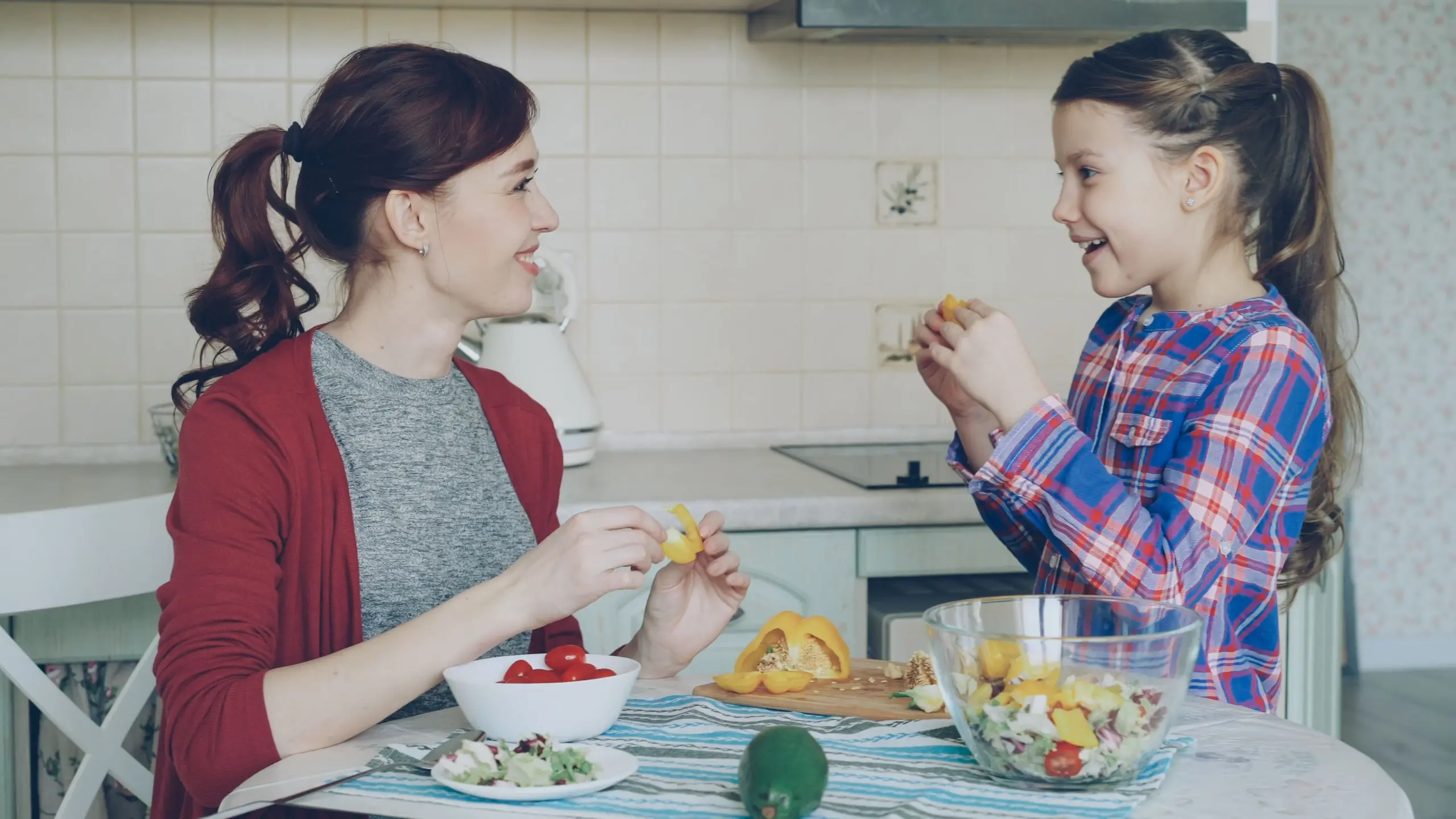
There may be various reasons why, in certain households and certain situations, children are being fed enough to make them overweight. Nobody is born overweight. Yes, some babies are bigger than others, but nobody is born overweight. It comes about through what they are fed.
An adult is responsible for what they put into their body. There are a few exceptions, but essentially, an adult is responsible for what they eat.
Children need guidance. If they are left completely to their own devices, they may well eat lots of sweet treats. That is understandable, but it does not mean they should be left to their own devices. It is up to the parents or guardians to say no and put food on their plates.
If the child says, “Look, I don’t want to eat that,” well, fine. There was a time when, if you didn’t eat your dinner, you went to bed hungry, and it was offered to you at breakfast time. I know some people are going to scream, but there is absolutely nothing wrong with that.
No child has ever gone on a hunger strike. If they are hungry enough, they will eat. It is about getting them into good habits.
Children of that age are reaching the point where they have become overweight to such an extent that, according to this article, those who were prescribed the medication already had other potential comorbidities. These included some metabolic dysfunction, which is just appalling in an eight-year-old, as well as prediabetes. As with metabolic dysfunction, that is appalling. There were a couple of other potential problems as well.
There are people who have responsibility for looking after these children who are asleep at the wheel.
Okay, it is also possible that the parents or guardians may not know better. But do you know what? I don’t quite accept that as an excuse. There is enough information available today to tell us which foods are better or worse for children and, for that matter, adults to eat.
It also teaches children that the solution to their problems is not to change their behaviour.
I do add the rider that children’s behaviours are influenced by the people who care for them. Teaching children that some form of medication is going to be the answer means they learn that lesson early. There is a fair likelihood that they will apply it later in life.
Of course, being a medical study these days, it also has to go into the demographics and add some woke components to it.
Surprise, surprise, these prescriptions are off-label, which means that people have to pay the full amount. There is probably not going to be any insurance coverage.
“Prescriptions favoured socioeconomically advantaged families, raising concerns about widening disparities in paediatric obesity care.”
Yes, if you have more money, you can afford medications that people with less money cannot afford. However, it also raises a fascinating question about people who are in socioeconomically advantaged areas or come from socioeconomically advantaged families. The term is not defined, but you have to think of SES 1 and 2.
These are people who are probably making more money. Generally, but not always, people making more money in life have probably achieved higher levels of education and are more likely to have an understanding of health. Not always, of course, because people are different.
But yes, if you have more money, you can buy more things. There is nothing new about that.
This goes back to what I said before. If there isn’t awareness, then, to be fair, people who are more socially disadvantaged, for whatever reason, may face difficulties. However, even the poorest people in Western countries usually have phones and internet connections these days. None of these ideas about what is good or bad to eat are particularly new.
Okay, fair enough, there are some disparities. I’m not going to walk away from that. However, people in better-off areas are much more likely to have better knowledge. They are much more likely to be able to make better choices, if you like. “Better choices” is not a great term, but we’ll use it, about what they eat themselves and what they give their children.
The other argument that gets trotted out is that it is expensive to eat healthily. The cheapest foods you can buy are vegetables that are in season.
A head of lettuce doesn’t cost that much. A kilogram of carrots costs a few dollars. Yes, you can buy expensive fruits out of season that have come from some exotic location, but vegetables in season are the cheapest form of food.
Now, whether children like to eat their vegetables is a separate argument. I get it, but that is a separate argument. It falls to the parents to say, “No, you’re not getting a chocolate bar. These are your vegetables.”
Yes, we’re giving you some protein with them, whether it is meat, fish, chicken, or vegetable protein if you are that way inclined. None of this is particularly difficult.
Previous generations, with far less access to technology and information, managed this very, very well.
Fifty years ago, we did not have issues to the extent that we have today with either adult or childhood obesity and excess weight. People had less information, and, in the main, although not always, people weren’t as wealthy.
Go back 100 years, and most people did not have a lot of money. Some did, but not that many.
Somehow, however, we had lower rates of obesity. There are some correlations with socioeconomic status. It is a factor, but if you look over a slightly longer journey through human history, it is not the complete explanation.
Even as recently as 40 or 50 years ago, we had a different world. Those who are regular listeners to the podcast, and thank you for that, will know that we have previously spoken about the calamitous outcomes of the low-fat dietary guidelines, which have landed us in this pickle.
So, what’s the answer?
It is going back to basics. In my opinion, we do not want to create a generation that thinks medication is the answer to every problem. Yes, the numbers are small, so that is an important point to remember. However, while the numbers are small, you get the feeling that they are growing.
We do not want to create a generation that thinks the answer to every problem, especially problems substantially brought about by choices that either they or the people who care for them have made, is some form of medication.
There is a role for medication in a lot of conditions affecting human beings, but it is not the only answer.
We don’t know what the effects are on children of that age. I’m absolutely not saying that the effects are problematic, but they might be. We don’t actually know because it hasn’t been studied.
Particularly if you’re looking at longer-term use, side effects that might not show up in a trial lasting six months may well appear with widespread usage over five years.
Teaching, encouraging, or guiding children, whichever term you prefer, towards healthy eating is not complicated. It’s not complicated. It is made complicated, but it isn’t.
It is about the basics. It is about foods that, until relatively recently, were either growing somewhere or moving around. It is about moving away from the incorrect mindset that it is expensive to eat healthily. It actually isn’t.
One of the other hidden traps is that, if people eat food that is high in carbohydrates and sugars in particular, sure, some of it might be a little cheaper. However, you end up eating more because it doesn’t fill you up. It doesn’t provide satiety.
Again, the monetary argument falls down when it is actually examined and analysed. As I said before, the cheapest foods are vegetables that are in season.
As a society, we really need to look at what we are doing. We need to support adults and children as best we can in improving their health. But we need to do better than simply offering a pill or an injection.
Thanks for reading Dr. Joe Unplugged. If you enjoyed this podcast, please like, share, and consider subscribing. Tell your friends. If there are topics you’d like to see covered, be in touch through the chat or email [email protected].
We’ll be uploading new content each Monday. And soon we’ll be putting these videos out on X. You can follow me there at Dr. Joe’s DIY. For more on encouraging children to develop healthier food habits, read Children’s Health: The Winner of MasterChef. The research discussed in this article was reported by MedPage Today.

Dr Joe Kosterich – Doctor, Health Industry Consultant and Author
Doctor, speaker, author, and health industry consultant, Joe is WA State Medical Director for IPN, Clinical editor of Medical Forum Magazine, Medical Advisor to Medicinal Cannabis company Little Green Pharma and Course Chair, and writer for Health Cert. He is often called to give opinions in medico-legal cases, has taught students at UWA and Curtin Medical schools and been involved in post graduate education for over 20 years.
A regular on radio and TV, Joe has a podcast – Dr Joe Unplugged, has self- published two books and maintains a website with health information. He has extensive experience in helping businesses maintain a healthy workforce.
Past Chairman of Australian Tobacco Harm Reduction Association, current Vice President of Arthritis and Osteoporosis WA, Joe previously held senior positions in the Australian Medical Association and has sat on numerous boards.


