
 Before we get to what’s making a comeback, this is based on a piece in WA Today, and it does apply to Perth. But I’m pretty sure it’s not unique, and that this may be a trend we might be seeing more of.
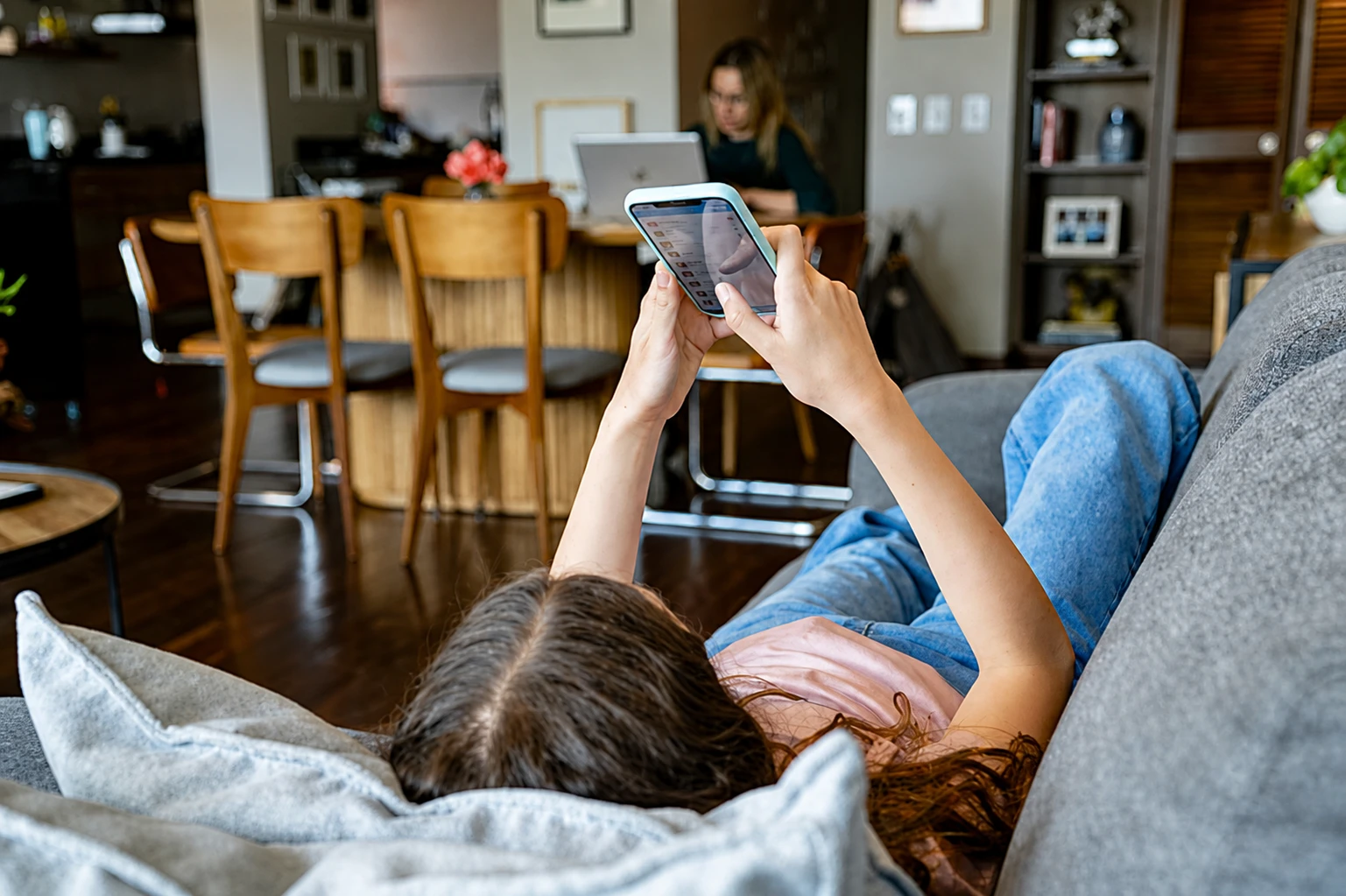
According to a new report, the average Australian spends roughly 5 hours and 52 minutes a day online, and an average of 19 and a half hours a week on social media. That is close to about 2 and 3/4 hours a day. Twenty-one hours a week would be 3 hours a day, so 19 and a half hours is not far from that.
The 5 hours and 52 minutes spent online need to be broken down, and this report hasn’t done that. For example, are you doing work? Are you reading? You might be using a reading device, such as a Kindle or something else. You might be reading a newspaper online rather than reading the print version, which is increasingly something people do. I do that myself. I get The Weekend Australian and read The Australian newspaper on the app or online. And no, I don’t get any commission from them.
So, there is that time. We might be checking our emails. We might be listening to music or to podcasts. All of that is time spent online. But some of that may be productive time. So, not all time spent on screens or online is, if you like, just scrolling.
But 19 and a half hours a week on social media — yes, that is scrolling. And one doesn’t have to go a long way back in history. We’re talking pretty much 20 years, and nobody was doing this. There was no social media. I think MySpace, which obviously doesn’t really exist anymore, was the first platform along those lines.
Facebook started in 2004, but it didn’t really start to take off until around 2008 or 2009. Twitter, or X as it is now called, started around 2007. LinkedIn was probably around the same time, and Instagram came a little bit after that. So, we’re talking about 20 years. We’re talking about one generation.
When I was a teenager, there was no social media. If you were a teenager in the early 2000s, there was no social media. This immediately tells us that everybody had the best part of an extra three hours in the day, every day, which they are now using on social media.
And there’s nothing wrong with spending some time on social media.
If you log into social media periodically — and again, I’ll put my hand up here — I look on X. Interestingly, it is sometimes the place where you get breaking news first. And yes, maybe some of it is the fabled disinformation or misinformation, but there’s a lot of that around, and it’s not unique to social media. So, it does have its role.
Craft clubs are making a comeback. There is a bit of a trend here. One particular craft club runs every couple of weeks somewhere in Perth. Craft Club, from 6 p.m. to 8 p.m. every second Thursday at Fremantle Piazza, allows people to connect outside of social media through their love of crafting.
Once upon a time, people did activities such as painting, pottery, other artworks, sculpting, knitting, crocheting, making things, and jigsaw puzzles. I think during the early years of the pandemic response, jigsaw puzzles made a bit of a comeback. We had one. It’s probably not my thing; it just got a bit too hard, in my opinion. But other people really did well with them.
Some jigsaw puzzles have thousands of pieces, and a lot of the pieces look very, very similar, especially when there is a blue sky. But it’s good, and it is something that you need to think about. Often, you might be doing it with other people who live with you. You’re doing it while they are in the room with you, rather than being online somewhere else.
And we have lost a lot of connection in society.
People get onto dating apps. Again, it is the modern world. I’m not pining for some past, but there is a lot to be said for meeting people in person.
You’re going to learn a lot more about somebody by sitting across a table from them or standing next to them and having a chat with them in person, rather than looking at an image online. Fact. Absolute fact.
So, this club is growing, and I suspect that it’s not the only one and won’t be the only one.
Not everybody is particularly “arty,” but there is a lot to be said for doing some form of creative activity, and that can include writing as well. It might be playing a musical instrument.
Other activities can include sports. One can play card games. My late mother was quite a fan of canasta back in the day, and then bridge. She used to go to a bridge club, I think once or twice a week. Once more, you’re sitting in a room with other people who share a common interest, and you’re not on screens.
So, I think this is a really positive trend for a variety of reasons.
First, it does get you off screens, and in some respects, that is not always going to be an end in itself. However, in this modern era, if we’re spending significant periods of time on social media, then less time on social media is, I think, a good thing.
How much time should one spend on it? I haven’t got a number, but I think the more time one spends on it, the less good it probably is. Maybe an hour a day tops. People will have different opinions on that.
So, people then say, “Well, if I’m not on my phone, what am I going to do?” And this is where these types of activities come in. That is a good thing. You might say, “Well, I don’t really know how to knit, crochet, sculpt, paint, or do anything like that.” Fine. Good. You can learn. It also needs to be something you have an interest in.
And you don’t have to be the next Van Gogh with your painting. You don’t have to knit something that is going to be worn by a model on the catwalk in Milan.
Again, I think back to previous generations, and my late mother quite enjoyed knitting. It was something she could do in the evening. If there was nothing in particular she wanted to watch on TV — and she wasn’t a great fan of watching lots of TV — knitting was enjoyable, productive, and calming.
Once your mind is focused on an activity, you’re also not thinking about anything else. If you are painting, crocheting, or doing some needlework, whatever it might be, that is your focus. You’re not focused on the world situation. You’re not focused on how many likes your post has received. You’re not focused on whatever comments people may or may not have made about your post.
And you’re also not comparing yourself to other people. One of the big issues that some commentators have noted — and I agree — is that the advent of Instagram has coincided with a deterioration in mental health, particularly among teenage girls. Jonathan Haidt and Abigail Shrier, both excellent writers from America, have written about this. Teenage girls look at these images on Instagram, many of which are probably photoshopped, and then think, “Well, I can’t look like that.”
Well, you can never look like a photoshopped image. You can’t. Of course you can’t. It’s not the real world. But people can be affected by it, and the data seems to suggest that they are.
What’s the solution? Spending less time on that and not comparing yourself to others. Now, I appreciate that can be easier said than done, but that doesn’t take away from it being an important point.
And certainly, for all the parents out there listening, I’d encourage you to talk to your teenagers in particular, but even to younger children, about doing the best they can and leaving other people to do what they do.
One doesn’t have to compare oneself with others. There will always be — and again, it’s an old quote, but it’s valid — people who are better or worse than yourself. Fact. There are a couple of exceptions, but I think you know what I’m talking about.
So, this is really good. And maybe we’re reaching the high watermark of online interaction.
I think it has also been aided and abetted, to some extent, by some of the pronouncements and policies from governments that have almost encouraged people to meet virtually rather than in person.
I don’t want to go down that rabbit hole. I think you know what I’m probably getting at, and it might be a conversation for another day. But real interactions with real people do matter. Loneliness and isolation are independent risk factors for a number of conditions, and they are also factors in longevity.
Going to a meeting, group, or club where you share interests with other people is also a great way to meet new friends. It doesn’t have to be a relationship, in inverted commas, but it can be a way to meet new friends. You’ve got a common interest. That’s the beginning of a conversation. See where it leads. You don’t have to be great mates with everybody. No, but you can have a common interest.
Above all else, you can engage in activities that stimulate the mind. Again, if they are more sporting-like activities — and I haven’t really touched on that — they can also be good for the body.
But the more creative tasks, and I really do broaden that out to arts, music, and anything creative, are very, very good for the mind. As I mentioned before, you’re not thinking about other issues. You’re focusing on what you’re doing, and at the end of it, you can sit back and say, “I did that.”
“I did that.” There is always going to be a sense of achievement. And if you look at it and think, “Well, I think I can do better,” you can always do something else.
Again, with music, we’re not all going to be great musicians, but we can enjoy singing or learning to play the guitar, piano, or whatever it might be.
So, this is an interesting trend, and I’m going to stick my neck out here and say I suspect it’s going to be a growing trend because pendulums swing. I think the pendulum, in terms of online time and the use of social media, is going to reach a peak and then come back. It will find its correct level, which is not zero, but it is not what it is now.
So, what can be a takeaway from all of this? Think about what you’d like to do. How could you invest your time in doing something enjoyable, creative, and fun, where you can potentially meet other people and chat with them live rather than online? There’s no right or wrong answer. There is a whole variety of activities one could get involved with. It is about finding what is right for you.
Thanks for reading Dr. Joe Unplugged. If you enjoyed this blog, please like, share, and consider subscribing. Tell your friends if there are topics you’d like to see covered. Be in touch through the chat or email [email protected].
For further reading, check out the article: The Health Benefits of Pet Ownership

Dr Joe Kosterich – Doctor, Health Industry Consultant and Author
Doctor, speaker, author, and health industry consultant, Joe is WA State Medical Director for IPN, Clinical editor of Medical Forum Magazine, Medical Advisor to Medicinal Cannabis company Little Green Pharma and Course Chair, and writer for Health Cert. He is often called to give opinions in medico-legal cases, has taught students at UWA and Curtin Medical schools and been involved in post graduate education for over 20 years.
A regular on radio and TV, Joe has a podcast – Dr Joe Unplugged, has self- published two books and maintains a website with health information. He has extensive experience in helping businesses maintain a healthy workforce.
Past Chairman of Australian Tobacco Harm Reduction Association, current Vice President of Arthritis and Osteoporosis WA, Joe previously held senior positions in the Australian Medical Association and has sat on numerous boards.


